Jul 13, 2016
Complying with the EPA’s Effluent Limitation Guidelines for the Power Plant Industry
On September 30, 2015, the EPA published the first update to the Steam Electric Power Plant Generating Effluent Limitation Guidelines (ELG) in 33 years. The biggest changes from the previous rule will be dry handling and zero discharge rules for certain wastewater streams and new numerical effluent guidelines for other waste streams. These changes predominantly affect the coal-fired and integrated gasification combined cycle (IGCC) power plant facilities. The numerical guidelines for mercury (Hg), arsenic (As), and selenium (Se) in flue gas desulfurization (FGD) and IGCC wastewaters affect both existing and new sources, which in many cases will require significant upgrades and/or new wastewater treatment facilities to meet the new limits.
Below is a table that shows a sampling of the new ELGs* for various wastewaters and leachates. More details can be found here.
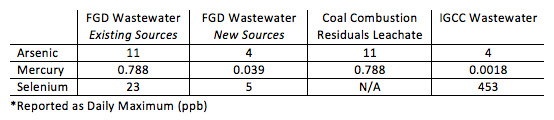
As facilities and their consultants develop an implementation strategy for compliance with the new rules, one of the key components is knowing what is in the wastewater before it can effectively be treated to remove these hazardous metals. Relying on total metals concentrations is not enough and careful examination of the speciation of each element of concern is crucial, particularly for selenium which can be problematic to treat down to low-ppb levels. Brooks Applied Labs is the industry leader in elemental speciation analyses with decades of experience working with FGD wastewaters, so please Contact Us today to learn more about our services and ask about our expedited turn-around times for your rush projects.
Jul 13, 2016
 Three members of the Brooks Applied Labs staff will be attending the upcoming National Environmental Monitoring Conference (NEMC) in Orange Country, California, August 8th – 12th. Our President/CEO, Michelle Briscoe, will be chairing a session on Metals and Metal Speciation Analyses in Environmental Samples the afternoon of Tuesday, August 9th, and our ICP-MS Group Leader, Tamas Ugrai, will be presenting a paper in this session on the “Merits of EPA Method 1640 for Preconcentration of Trace Metals with Online Matrix Removal Coupled to a Highly Sensitive and Selective ICP-QQQ-MS Detection System”. The full conference program may be viewed here. Rounding out our team will be our Technical Sales Manager, Jamie Fox, who will be running around trying to catch every talk, visit every exhibition booth, and connecting with all of our clients in attendance! If you’d like to connect with any of them while they are in Southern California, please feel free to Contact Us.
Jul 13, 2016
 Brooks Applied Labs’ Data Management Specialist, Mi Sun Chun, and her husband Derek, welcomed the newest edition to their family, Kaleb Hoon Chun, on May 31st. After a speedy delivery, Kaleb met his parents on what was also their wedding anniversary date! They are happy to report that Kaleb was delivered at a healthy weight of 7 lbs. 10 oz., or in lab terms, 3458.65 grams. Their dog, Teddy, is already in love with the newest family member. All of us at BAL wish to extend whole-hearted congratulations to the Chun family!
Jun 16, 2016
Dimethylmercury (DMeHg) is an extremely dangerous neurotoxin that can bioaccumulate in the body following exposure. This compound is not used in industry due to the risks involved, but it has been found to be produced under certain conditions when wastes containing mercury are stored. DMeHg is a liquid, but it has a very low vapor pressure, so it can be readily detected in the air as well. Recently, there has been a growing concern regarding exposure to DMeHg for workers.
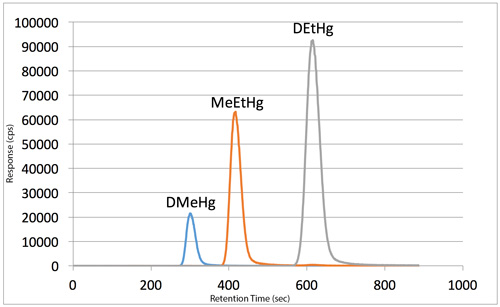
Brooks Applied Labs developed a method for the detection of DMeHg and other volatile mercury compounds decades ago. Our primary method utilizes cold vapor generation with gas chromatography coupled to an atomic fluorescence spectrophotometer (CV-GC-AFS), and this method is validated by a secondary technology using reverse-phase chromatography for the separation and ICP-MS detection (RP-ICP-MS). An added benefit of these methods is the capability to quantify methylethylmercury (MeEtHg) and diethylmercury (DEtHg) compounds, allowing for a more complete evaluation of the mass balance of the mercury species in a sample.
Chromatogram for 10 ppb DMeHg, 30 ppb MeEtHg, and 50 ppb DEtHg by RP-ICP-MS
To learn more about the full range of mercury speciation capabilities at Brooks Applied Lab or to discuss how analysis for various mercury compound could benefit your next project, please contact us.
Jun 16, 2016
 Sample collection instructor extraordinaire, Amanda Royal, will be offering her class on Collecting and Handling of Water Samples for Trace Metal Analysis through the Northwest Environmental Training Center (NWETC) this summer!
On July 21st, BAL will be partnering with the NWETC to present a full-day training course just outside of Seattle on the theoretical and practical application of EPA Method 1669. Tuition is $395 (reduced tuition available to employees of Native American tribes, nonprofits, and government agencies; students; and NAEP members). To learn more or to register for the class, view the EPA Method 1669 Training Course: Course Description and Registration.
May 12, 2016
Sample collection instructor extraordinaire, Amanda Royal, will be offering her class on Collecting and Handling of Water Samples for Trace Metal Analysis through the Northwest Environmental Training Center (NWETC) this summer! In order to achieve the ambient level detection limits required by the Clean Water Act, the EPA developed a number of analytical methods specifically for metals at “ultra-trace” levels (1600-series methods). One of the greatest difficulties in obtaining accurate data at such low concentrations is due to contamination occurring from the improper collection, handling, and transportation of samples. The 1600-series analytical methods are supported by EPA Method 1669: Sampling Ambient Water for Trace Metals at EPA Water Quality Criteria Levels.
On July 21st, BAL will be partnering with the NWETC to present a full-day training course just outside of Seattle on the theoretical and practical application of EPA Method 1669. Tuition is $395 (reduced tuition available to employees of Native American tribes, nonprofits, and government agencies; students; and NAEP members). To learn more or to register for the class, view the EPA Method 1669 Training Course: Course Description and Registration.
May 12, 2016
 Our Technical Sales Manager, Jamie Fox, will be attending the 10th International Conference on Remediation of Chlorinated and Recalcitrant Compounds May 22nd – 26th in Palm Springs. This annual conference draws over 1,500 scientists, engineers, regulators, and other environmental professionals to discuss the latest remedial technologies available for a variety of environmental contaminants, including metal and metalloid species. The conference program may be viewed here. Please contact us if you would like to connect with Jamie while in Palm Springs.
May 12, 2016
BAL Partners with the Mining Industry
 Brooks Applied Labs continues to expand our analytical capabilities and knowledge to further support the complex issues encountered by the mining industry. Our lab has experience supporting gold, molybdenum, lead, phosphate, taconite, silver, and uranium mines throughout the world. Whether it is the application of our total elemental analysis results to confirm an issue exists or our metalloid speciation analyses to ascertain the fate and transport or treatability of the contaminants, BAL can support your needs. Read more…
Apr 8, 2016
DoD EMDQ Workshop
 BAL’s Technical Sales Manager, Jamie Fox, will be presenting at the 2016 Department of Defense Environmental Monitoring and Data Quality Workshop on April 12th. This annual conference, held April 12th – 14th at the Robert A. Young Federal Building in St. Louis, covers a number of data quality and analytical chemistry topics that center on the DoD Environmental Laboratory Accreditation Program. Jamie will be presenting during the Method Innovations session on “Improving Elemental Data Quality with Advanced Instrumentation Utilizing Multiple Interference Reduction Technologies.” Brooks Applied Labs is accredited to the latest version of the DoD Quality Systems Manual 5.0. Please contact us for a copy of our latest certification or if you would like to connect with Jamie in St. Louis.
ACIL P2 Meeting
 BAL’s President/CEO, Michelle Briscoe, will be attending the ACIL Policies and Practices (P2) Meeting in Arlington, Virginia, April 25th – 27th. The P2 Conference is an annual event that includes a full day of industry and sector specific meetings on government relations topics and updates from key members of the major EPA programs (RCRA/SW-846, Clean Water Act, Safe Drinking Water, and Clean Air Act). In addition, round-table discussions are on the agenda on the topics of “The Laboratory Executive’s Role in Establishing a Culture of Ethical Behavior” and “Best Laboratory Business Practices,” and there will be an executive coaching session on leadership and communication. Please let us know if you would like to hear more or if you would like to connect with Michelle while she’s in the Washington DC area.
Apr 8, 2016
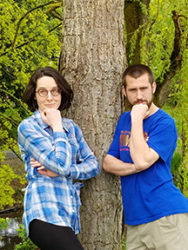 Brooks Applied Labs employees’ Scott Anderson and Tiffany Stilwater individually completed programs Master Naturalist and Master Gardener! Each program has several months of class lectures and a strong emphasis on sustainability, restoration, science-based landscape management, and volunteerism. Scott and Tiffany will be donating approximately 200 hours of service over the next two years. In the near future, Scott will be leading an urban plant identification hike and will assist in choosing the 2017 plant “Species of the Year”. Tiffany will be staffing a Master Gardener’s booth at local farmers markets and focusing on maintaining a vegetable garden for Shorewood High School Culinary Arts program. We are very proud of our staff who spend their personal time giving back to our community, and we congratulate Scott and Tiffany on this accomplishment!
